Industry Insights
How AI Is Revolutionizing Concrete Production
· 7 min read
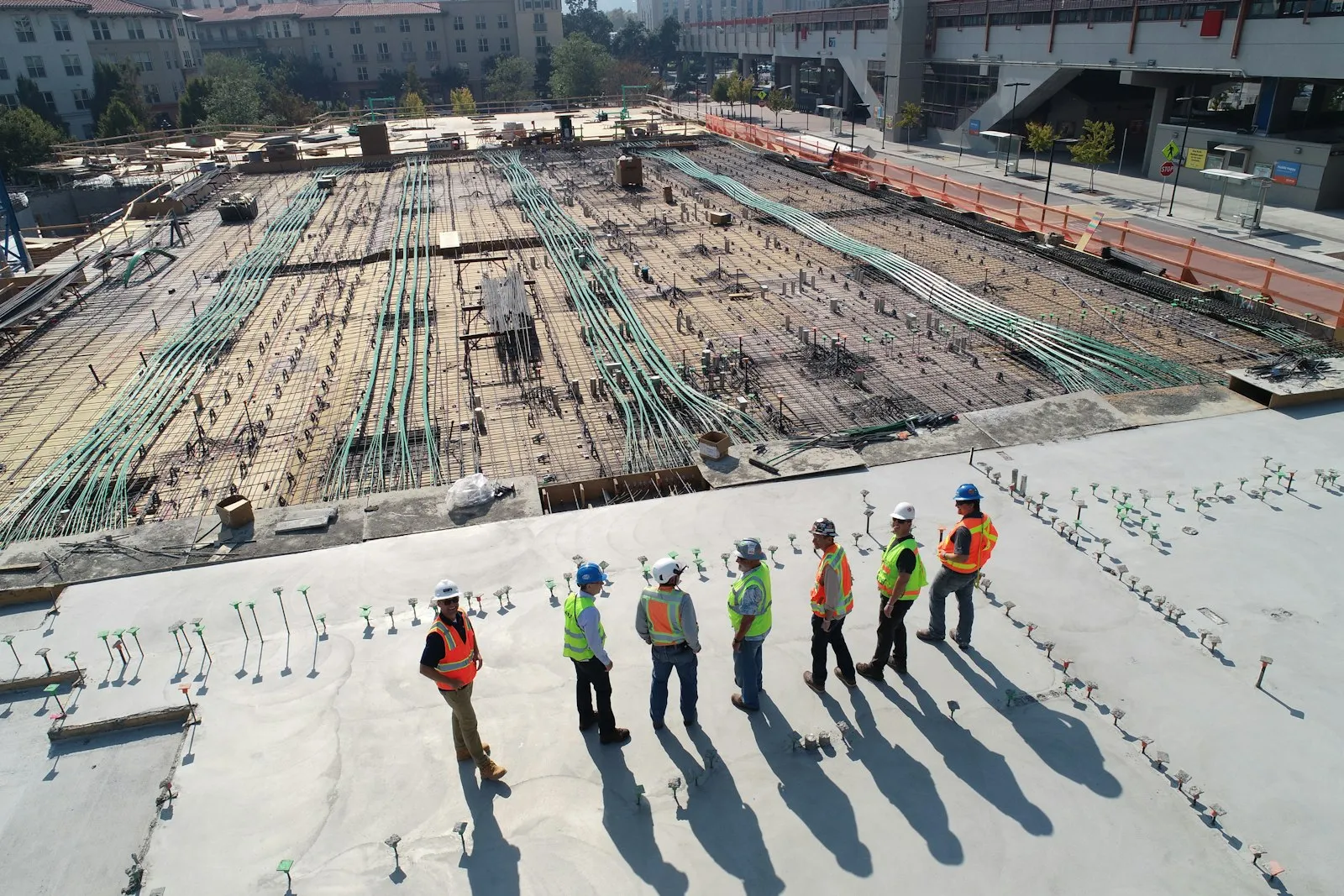
Artificial intelligence is changing how concrete producers manage production, monitor quality, and make decisions. For ready-mix companies looking to improve efficiency and stay competitive, the biggest opportunity isn't replacing people with technology. It's giving them better information and the ability to act on it.
The concrete industry has never been short on hard work, experience, or expertise.
Walk into any busy batch plant, and you'll find operators managing production schedules, monitoring material weights, responding to equipment issues, and keeping trucks moving. They're making decisions throughout the day, often under considerable pressure.
But there's a problem that even the most experienced operators and plant managers face.
Having the information you need isn't the same as being able to use it.
Every batch plant generates an enormous amount of data. Material weights, moisture readings, water additions, cycle times, production volumes, and equipment activity are all recorded throughout the production process.
For companies operating multiple facilities, that information quickly becomes overwhelming.
And while most producers have access to production reports, finding meaningful answers often requires digging through spreadsheets, comparing data from different systems, or waiting for someone to compile the information.
Artificial intelligence is beginning to change that.
With platforms like RediView (https://www.redi-view.com/), concrete producers can bring their operational data together, monitor plant performance, and use AI to better understand what's happening across their facilities.
The result is something the industry has needed for a long time: technology that makes complex operational information genuinely useful.
Here are three ways RediView is helping concrete producers take advantage of AI and why those capabilities matter for the future of ready-mix production.
1. Getting Answers About Your Plants Shouldn't Take Hours
Imagine you're an operations manager responsible for 12 concrete batch plants.
It's Monday morning. You want to know which facilities performed well last week, which struggled, and whether any production issues deserve attention.
Sounds straightforward, right?
Unfortunately, getting those answers isn't always easy.
You might need to pull production reports from multiple locations, compare numbers, review operator alerts, and investigate anything that looks unusual.
By the time you've gathered everything, you've already spent a significant portion of your morning looking for information instead of using it.
What if you could simply ask your production data a question?
That's the idea behind RediBot, RediView's integrated AI assistant.
Rather than navigating multiple reports to find a specific answer, users can interact with their operational information using natural language.
For example, an operations manager could ask:
"Which of our plants had the highest production volume last week?"
Or:
"How did our material tolerance compliance compare across locations this month?"
RediBot helps retrieve and organize relevant reporting information, allowing users to investigate their operations without manually assembling every comparison.
Less time searching, more time solving problems
This is where AI becomes particularly valuable.
Most concrete producers don't need another dashboard filled with numbers.
They need to understand what those numbers mean.
Knowing that production decreased at a particular facility is useful. Being able to quickly investigate when the decline occurred, compare it against other locations, and examine related operational metrics is far more valuable.
RediBot helps make that process easier.
It can assist with reporting comparisons, summarize operational information, and present findings through readable explanations, charts, and tables.
Users can also access supporting reports to examine the underlying data.
That transparency matters, especially in an industry where decisions can affect concrete quality, operating costs, and customer relationships.
AI should help people make informed decisions, not ask them to blindly accept an answer.
For plant managers, quality control personnel, and executives, this creates an opportunity to spend less time preparing reports and more time improving performance.
And when you're responsible for multiple facilities, those time savings can add up quickly.
2. Catching Production Problems Earlier Can Save More Than You Think
Every concrete producer knows that small problems have a way of becoming expensive ones.
A material tolerance issue might initially affect only a few loads.
An equipment problem might cause minor interruptions before developing into a larger production delay.
A gradual increase in batching cycle times might go unnoticed until the plant begins struggling to meet its schedule.
The frustrating part is that many of these issues leave clues in the production data.
The challenge is recognizing those clues before the problem gets worse.
Better visibility changes how quickly teams can respond
RediView gives producers a centralized way to monitor important operational information, including production performance, material usage, moisture conditions, and quality control metrics.
Instead of relying entirely on end-of-day reports, authorized personnel can review plant activity and investigate issues as production information becomes available.
Configurable alerts also help bring attention to monitored conditions that exceed established thresholds.
Consider a plant experiencing an unusual number of material tolerance deviations.
Without effective monitoring, the issue might not receive attention until someone reviews the day's production records.
With RediView, teams have tools to identify the deviations, examine the affected production data, and investigate what might be contributing to the problem.
RediBot adds another layer by helping users explore the information through natural-language questions.
A quality control manager might want to compare compliance performance between shifts or determine which plants experienced the largest increase in operator alerts.
Instead of manually searching through multiple reports, the manager can use AI-assisted analysis to narrow the investigation.
Small improvements can have a significant financial impact
Think about batching cycle times.
If a plant consistently takes longer than expected to produce each load, the additional time might seem insignificant.
But across hundreds of loads, small delays can reduce overall production capacity.
The same principle applies to material consumption.
Even modest inefficiencies can become costly when repeated throughout the day, especially across multiple facilities.
RediView provides reporting tools that help producers examine these operational patterns, including cycle times, material usage, water balance, and equipment performance.
AI makes it easier to investigate the information and identify areas worth examining.
Of course, software can't replace an experienced operator's understanding of the equipment or a quality control professional's judgment.
Nor should it.
The real advantage comes from combining that experience with reliable, accessible production data.
When employees can recognize issues sooner and investigate them more efficiently, they're better positioned to make corrections before small problems create larger consequences.
For ready-mix producers operating on tight margins, better visibility isn't simply convenient. It can directly influence profitability.
3. Managing Multiple Batch Plants Becomes Easier When Everyone Has the Same Information
Running a single concrete batch plant involves countless moving parts.
Managing 10, 20, or 50 facilities introduces challenges that are difficult to solve with disconnected reporting systems.
Different plants have different equipment, production demands, personnel, and operating conditions.
One facility might consistently outperform another.
Another might experience recurring material deviations.
A third might have equipment-related interruptions that aren't immediately obvious when reviewing its overall production totals.
The problem isn't necessarily that management lacks access to the information.
It's that understanding the bigger picture can require significant time and effort.
One platform, a clearer picture of your entire operation
RediView brings production information from multiple facilities into a centralized platform.
Its organizational structure supports companies managing individual plants, regions, and larger groups of facilities.
That allows authorized users to examine performance at the level most relevant to their responsibilities.
A regional manager can focus on the plants they oversee.
A quality control director can compare compliance performance across locations.
An executive can review broader operational trends without requesting separate reports from every facility.
And with RediBot, investigating those trends becomes more approachable.
Instead of spending hours preparing a comparison, a manager can ask questions such as:
"Which facilities had the most operator alerts last month?"
"How does production performance compare between our regions?"
"Which plants experienced the largest change in compliance?"
These are the questions that help companies understand where improvements may be needed.
More importantly, they help management move from reacting to individual problems toward identifying recurring operational patterns.
Making valuable information accessible to more employees
There's another advantage that deserves attention.
The concrete industry depends heavily on experienced people.
Veteran batch operators recognize equipment behavior that newer employees might overlook. Quality control professionals understand which measurements deserve additional investigation. Experienced plant managers know how to interpret changes in production performance.
That knowledge is incredibly valuable.
But companies also need ways to make operational information accessible to employees who haven't spent decades in the industry.
AI-assisted reporting can help bridge that gap.
A newer manager can investigate production trends without mastering every reporting interface.
A regional supervisor can examine facility performance without waiting for someone to prepare a spreadsheet.
And executives can ask questions about their operations without needing to know exactly where each piece of information is stored.
RediBot also provides access to concrete-industry knowledge, helping users better understand relevant production concepts and terminology.
This doesn't eliminate the need for training or practical experience.
It gives employees another resource for understanding the information in front of them.
For growing concrete producers, that accessibility becomes increasingly important.
As companies add facilities, expand into new regions, or bring new employees into the organization, having a consistent way to monitor and understand operational performance helps keep everyone working from the same information.
AI Isn't Replacing the Concrete Industry's Expertise. It's Making That Expertise More Valuable.
Artificial intelligence is often discussed as though its ultimate purpose is to automate everything.
But anyone familiar with concrete production understands why that approach doesn't tell the whole story.
Concrete is produced in the real world, where weather changes, materials behave differently, equipment requires attention, and unexpected situations are part of everyday operations.
Experienced people will always play an essential role.
The opportunity for AI isn't to remove those people from the process.
It's to give them better tools.
A batch operator who can quickly investigate unusual production conditions is better equipped to respond.
A quality control manager who can easily compare material compliance across facilities has more information to guide improvements.
An executive who can understand operational performance without waiting days for consolidated reports can make decisions sooner.
That's where RediView fits into the future of concrete production.
By combining centralized plant monitoring, advanced reporting, configurable alerts, and AI-assisted analysis through RediBot, the platform helps producers make better use of information they're already generating.
And as the industry continues to face pressure to improve efficiency, control costs, and maintain consistent quality, that capability will only become more important.
The Competitive Advantage Starts With Better Information
There's no shortage of technology promising to transform the concrete industry.
But meaningful innovation isn't measured by how complicated a system is or how many features it offers.
It's measured by whether it helps people solve problems.
Can your operations team quickly identify which plants need attention?
Can your quality control personnel investigate deviations without spending hours assembling reports?
Can your management team compare performance across facilities and make informed decisions using reliable information?
If answering those questions requires multiple spreadsheets, disconnected systems, and considerable manual effort, there's an opportunity to improve how your organization operates.
RediView was built to make that information easier to access, understand, and act on.
From individual batch plants to large, multi-location operations, the platform gives concrete producers a centralized view of production performance and the tools to investigate what matters.
With RediBot, AI becomes a practical part of that process, helping turn complex reporting data into useful operational insight.
The companies that benefit most from AI won't necessarily be the ones adopting every new technology that comes along.
They'll be the ones using it to make smarter decisions, support their employees, and improve how their plants operate.
And that starts with knowing what's actually happening across your operation.
See What RediView Can Do for Your Concrete Operation
Your batch plants are already generating valuable production data every day.
The question is whether your team has the tools to make the most of it.
Whether you're managing a handful of facilities or overseeing production across an entire organization, RediView can help you gain better visibility, simplify reporting, and uncover opportunities to improve performance.
Want to see how RediView and RediBot could work for your batch plants?
Connect with our team to discuss your current operations, reporting challenges, and how RediView could help your organization make better use of its production data.
Explore RediView and Request a Demo: https://www.redi-view.com/
Discover what your production data has been trying to tell you.
See Your Production Data Differently
Request a RediView demo and see RediBot in action.
Request a Demo